«Soy consciente de que soy único»: el podcast de phaware® «
», episodio 536: Eric Borstein
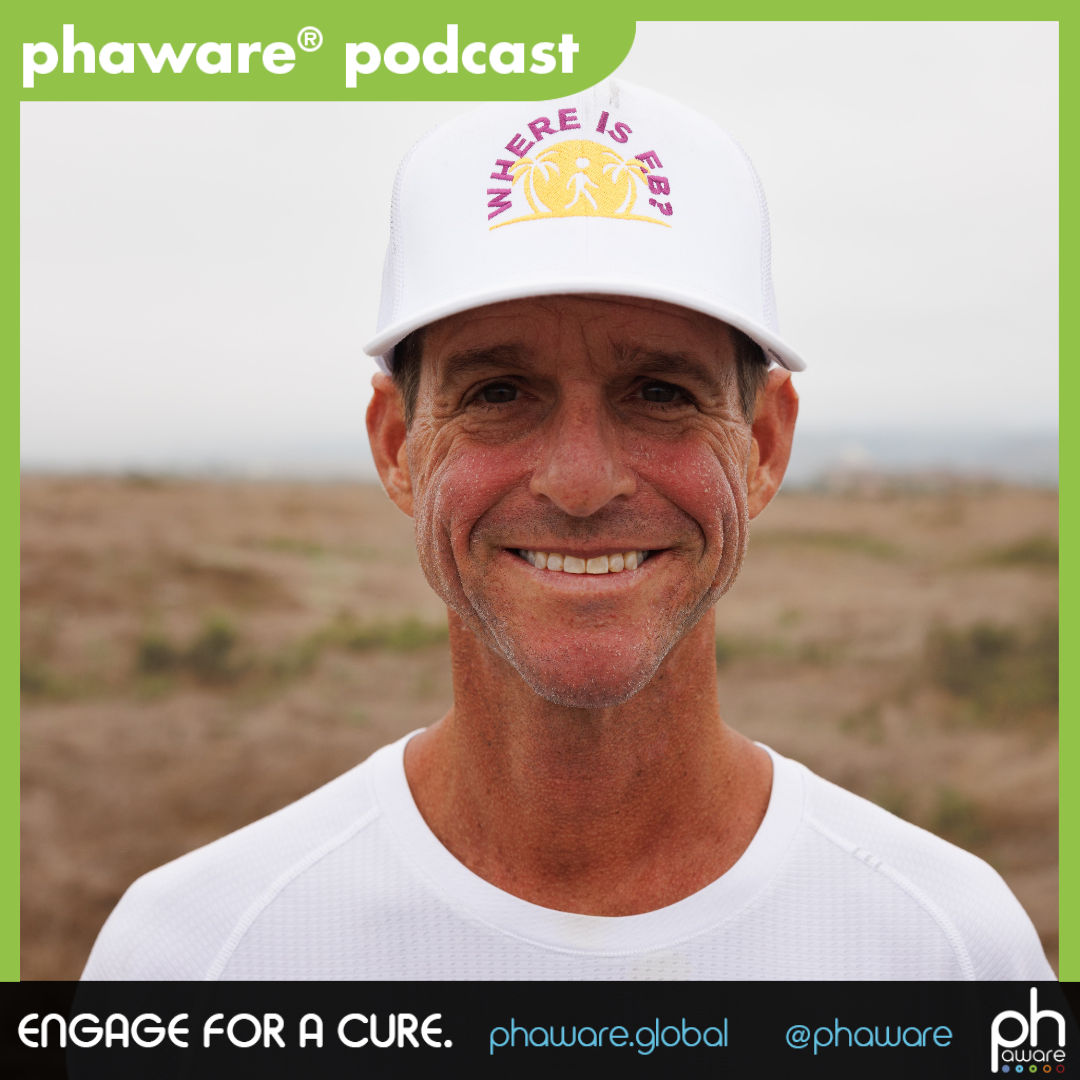
Cuando Eric Borstein sufrió un colapso en su dormitorio en 2020, los médicos le dieron solo unos meses de vida. Sin embargo, él se rebeló contra el destino gracias al ejercicio físico, la salud mental y el apoyo de su comunidad. Ahora lidera un movimiento, recauda cientos de miles para la investigación de la hipertensión pulmonar y recorre 200 millas a pie por la costa de California para demostrar que la esperanza no tiene límites.
Steve Van Wormer:
Bienvenidos a «I’m Aware That I’m Rare»: el podcast de Phaware. Soy Steve Van Wormer, de la Asociación Global Phaware. Me acompaña Eric Borstein, un paciente al que quizá reconozcáis del podcast, ya que participó en un episodio con nosotros el año pasado. Eric vive en Los Ángeles. Es un paciente con hipertensión arterial pulmonar diagnosticada en 2020 y tiene algunas novedades interesantes que contarnos sobre lo que ha sucedido en su vida desde la última vez que apareció en el programa, hace más de un año. Eric, muchísimas gracias por estar aquí hoy.
Eric Borstein:
De nada. Gracias, Steve, y gracias por invitarme de nuevo.
Steve Van Wormer:
El año pasado organizaste una marcha llamada «¿Dónde está EB?» Básicamente, caminaste desde Santa Mónica hasta San Diego a lo largo de una semana. Antes de entrar en detalles, me gustaría que ofrecieras a los espectadores una visión general de lo que te sucedió en 2020 y que te llevó a realizar esa primera marcha «¿Dónde está EB?».
Eric Borstein:
So, September 21st, 2020, I collapsed in the bedroom and almost died, was taken to St. John’s Hospital here in Santa Monica where I was stabilized and was diagnosed with Class 4 pulmonary arterial hypertension. I had collapsed from severe right ventricular heart failure.
After a few days and being stabilized, I was transported to Cedars-Sinai and I spent a total of 16 days in the ICU. (Doctors) told my wife I had three to six months to live. I didn’t know any of this. I had made a decision very early on that I was going to beat this disease, and I didn’t know what that meant. But I looked my wife straight in the eyes, tears rolling down my face, and said “I’m going to beat this disease,” and she had tears rolling down her face and she said, “I know you will.” But I didn’t know how sick I was.
I came home and started walking, which helped mitigate those side effects (of the medications). A block turned into two, turned into three, eventually a mile, and two and three. Walking just became a big part of my life. I also, very early on, started talking to a psychologist and realized that living with a terminal disease like PAH, positive mental health was very important.
So, through positive mental health, exercise, strict nutrition, and relying on family, friends, my neighbors, my community, what I call my “village,” I’ve made nothing short of a miraculous recovery. I was put on a pump. They never thought I would get off the pump. After a year, my right ventricle made almost a complete recovery and I was taken off the pump. I’ve been on oral medications ever since. Obviously, there’s no cure for PAH, so I live with it. But I’ve adopted this, what I call “pieces of my pie,” which again are medicine, positive mental health, nutrition, exercise, and my village. That’s what I live by.
Now that I’m better, I’m feeling better, I’ve dedicated my second part of my life not only to my health and my family, but to advocacy and raising awareness for the disease, and then also for underprivileged people who need it most.
When I was diagnosed with PAH, we have a family foundation and we got involved with National Jewish Health in Denver, and we got involved with funding research. This is a disease that nobody in my world had ever heard of before I was diagnosed. We looked around the country, found NGH. On one visit back there, about probably three years ago now, I was introduced to Patty George who was one of the founders of Team PHenomenal Hope. They said, “You’ve got to meet Patty.” We met and her energy was infectious. The mission that the organization had aligned with the lifestyle I was living.
Right around that time, my oldest daughter came to me and said, “Dad, I want to do a fundraiser for the disease that you live with,” and Where is EB was born. What better organization to raise the money for than Team PHenomenal Hope? I thought, okay, let’s do a walk. So, we did a 5K walk and fundraiser, and I’m like, you know what? What better way to raise awareness for a rare disease than to go big? I planned a walk from LA to San Diego. A 170 mile walk.
I would go down the coast, end in Del Mar. So, we started planning Where is EB, and what I thought would be 150 people coming out to a walk, maybe we would raise $75,000 through friends and family and people that we know. We raised close to $200,000 all for PH, PAH research and helping provide for people living with the disease that need it most.
The first Where’s EB I walked from, like you said, Santa Monica. We headed down the coast. Once we hit Huntington Beach, I just went down pretty much Route One. The biggest hurdle was Camp Pendleton. It turned out through the help of Carl Hicks, another board member, but somebody who I’ve become very close with.
It’s a very close-knit community because the disease is so rare and I’ve met so many amazing people along the way. Carl, who lost his daughter, Meagan. Ashlee Gambino, who I had the privilege to meet on a trip back to Las Vegas, who’s a patient who has just an amazing story. And I met you and I learned about your story with Lucas. It is just such a tight-knit community, because when you’re touched by this disease, whether it’s losing a loved one or, like myself, being a patient, it is a family.
So, Carl helped us through Camp Pendleton. That was a big hurdle because you can’t go from LA to San Diego without going through Camp Pendleton. The US Marines could not have been more supportive. That day, going through Camp Pendleton was the highlight of my week. I was being escorted by the Marines. They brought in somebody to do an interview, and I’m being interviewing and we’re walking, and I share my story. The interviewer stops and he looks at me and he said, “Sir, can I ask you a question?” He said, “Are you a Christian?” I knew immediately why he was asking me this.
I said, “I’m not, but what I can tell you is I was given a second chance in life, and that second chance was to provide hope for those who need it most.” He stops, and I’m abbreviating the story, but he puts his hand on my shoulder and he said, “Sir, that’s probably one of the most meaningful things I’ve ever heard in my life, and that transcends all religion. Thank you.” I realized right then and there that by sharing my story and by doing Where is EB and raising awareness for the disease, you never know who you’re going to help.
So, we get through Pendleton. I’m with Hap Farber. He was accompanying me by bike down the coast. Hap is another Team PHenomenal Hope board member, an expert in the field, and has become a friend. We probably got into the Del Mar area, and I had already calculated. I’m feeling great, there’s no way we’re going 175 miles. In Hap’s head, he already had figured this out. He had already gotten to know me. Because I was pushing the whole way, and I’m living with PAH. Here I am pushing going down the coast, and we get into Old Town San Diego, and we go to bed and we wake up and I turn to Hap and I’m like, “We’re not going 180 miles.” He goes, “I know. We’re going 200.”
So, we ended up going all the way down to Imperial Beach, if anybody knows Southern California. Almost down to the border. We were like three miles from the border. Came and then went up through Coronado, ended in Del Mar. It was 202 miles in six and a half days, all raising awareness for PAH and PH. That was last year, last September. The story just started to take off. I’ve met some amazing people along the way, developed relationships with people along the way, and it’s evolving. It’s evolved into a movement, is what I call it.
I couldn’t be luckier. People ask me, they say, “Do you have any regrets through this whole process?” I realized that I put people through some hardship in those years leading up to collapsing. I knew I was sick, but I wasn’t going to the doctor. I was afraid to find out what was wrong, and I learned later on from my psychologist that upwards of 75% of men who are very sick don’t go to the doctor. So, I wasn’t alone. But I wasn’t going to the doctor, and it was really creating hardship in my family, and for my wife and my kids, and it was creating issues in the house. Through the whole process, I have two regrets.
One is that I put my family through that in those four or five years, because living with PAH is very alienating. You can be surrounded by 20 people, but you’re alone because you’re suffocating. That was one of my regrets. My second regret is that one of my kids saw me collapse, and then my second daughter… It was during COVID, so everybody was home, and my second daughter came up and sees me lying in a pool of blood. That is the hardest thing for me and that is my biggest regret.
But besides that, I tell people if it didn’t happen so dramatically, with stress that was going on in my life I might’ve been still dealing with that, but maybe I solved my health issues. But not everything would’ve been resolved. When I collapsed, it was like breaking through a sheet of ice. Everything went away. All problems, all stress, anything I was dealing with. I decided right there and then I was going to get help, I wasn’t going to die, and I headed down a completely different path and I haven’t looked back. That’s my only regret.
The last year has just taken on this amazing life of its own. I look at this as a second chance. So, through speaking engagements and then this very special project that we’re now working on. I was approached about doing a full feature documentary and hired an amazing production company who’s both familiar with obviously very good at documentaries, but also familiar in the rare disease field. It’s owned by a woman by the name of Christie McCaffrey, amazing person, mom. She lost her mom to scleroderma, so she understands rare diseases. We’re working on this amazing film.
It’s going to educate people on PH and it’s going to educate people on PAH, but it’s really a movie about overcoming adversity and providing hope, and through the adversity, what people do. It’s going to feature myself and my story, but it’s bringing in Carl Hicks and he’s going to share his story, it’s going to bring in yours truly (Steve Van Wormer), and it’s going to bring in Ashlee Gambino. It’s going to share their stories, but it’s going to share what each individual has done through their adversity, through their moment and what they’ve done with it.
The hope is that it educates people on the importance of mental health, and village, and education, and exercise and diet. But really for anybody going through adversity, whether it’s living with a rare disease, losing a home in a fire, going through a divorce, losing a loved one, being diagnosed with anything, taking that first step and utilizing these tools, and how have we gotten through it and what are we doing with it?
We’ve all decided to take that first step in our own way. My hope is by sharing my story and sharing these other stories that other people can see that and they can see if we can do it, they can do it. So, that’s a really special project that I’m working on.
Then, we’re putting together the second annual Where’s EB? That’s going to be on September 7th. After the event, after the 5K, which is going to be an amazing, fun morning with food and giveaways and music and speakers, everybody’s going to bid me adieu and I’m going to head down the coast again and walk 200 miles in six and a half days from LA to San Diego, and we’re going to do it all over again. All with the hopes of raising as much awareness for the rare disease that I live with, which is pulmonary arterial hypertension and pulmonary hypertension.
Steve Van Wormer:
Es interesante: cuando describes lo que te pasó hace cinco años, cuando decides levantarte y seguir adelante —ya seas el paciente, en tu caso, o un cuidador, o lo que sea, como el cónyuge de alguien afectado por esta enfermedad—, ¿puedes explicarme un poco cómo, en tu mente, pasas de desempeñar un papel más bien egoísta a uno más bien desinteresado? Si es que esa descripción es acertada.
En mi caso, siento que es como si estuvieras tirando de los hilos de la comunidad, de las relaciones y de las personas, y tuvieras la suerte de tener acceso a médicos, a otros pacientes, a apoyo y todo eso. ¿Cómo concilias todo eso en tu interior? Ya sea en tu vida cotidiana o cuando caminas solo por las calles o las autopistas de Los Ángeles, a mitad de camino hacia San Diego.
Eric Borstein:
Ayudar a los demás me salía de forma natural. Tengo una trayectoria filantrópica. A mis hermanos y a mí nos inculcaron desde muy pequeños que somos afortunados y que, precisamente por ello, debemos devolver algo a la sociedad. En realidad, no era una elección. Ibamos a devolver lo que habíamos recibido.
Siempre he sido entrenador voluntario. Incluso antes de tener hijos, ya hacía voluntariado en distintos sitios. Así que siempre dediqué mi tiempo, incluso antes de tener los medios para contribuir y ayudar económicamente a los demás. También he sido una persona muy extrovertida. Siempre teníamos gente en casa. Siempre me gustó rodearme de amigos. Simplemente era una persona muy optimista, extrovertida, amable y generosa. Así que en esos —lo llamaré— cuatro o cinco años previos al colapso y al aislamiento, aparte de sufrir problemas de salud que iban empeorando hasta el punto de no poder caminar ni respirar, lo más duro fue alejarme de todo y eso me sumió en una depresión.
Estaba deprimido. Yo no me daba cuenta. Mi mujer sí lo veía. Pero yo estaba deprimido. Ahora, mirando atrás, es porque no era yo mismo. Fue una época realmente difícil, y soy la persona menos egoísta que puedas conocer por naturaleza. Yo doy. No me gusta recibir, yo doy. No lo entendía mientras lo vivía, pero una de las razones por las que me estaba deprimiendo era porque no era yo mismo. No era feliz. No quería estar con gente. Me estaba aislando de verdad.
Después de que sufriera un colapso, me estabilizaran y pudiera volver a preocuparme por los demás, me resultó tan fácil y natural querer ayudar a los demás. Compartir mi historia fue muy terapéutico, y hasta el día de hoy sigue siéndolo para mí. Me ayuda. Me recuerda lo lejos que he llegado en tan poco tiempo cuando puedo decirle a la gente que hoy acabo de caminar 30 millas.
Vivir con una enfermedad es muy difícil. La gente me mira y me dice: «Tienes muy buen aspecto». Pero es una lucha constante. Vivir con HAP es una lucha constante. Cada día tienes que lidiar con efectos secundarios realmente graves. De nuevo, esa es una de las principales razones por las que camino. Tienes que aceptar el hecho de que vas a vivir con esta enfermedad el resto de tu vida, mientras sigas vivo. En el fondo de tu mente, siempre está ahí. ¿Me fallarán los pulmones? ¿Me fallará el corazón? Siempre está ahí. Así que es una batalla. Es una batalla diaria, tanto mental como física.
Pero cuando pude y estaba lo suficientemente sana como para ayudar a los demás, fue algo muy natural. Es algo que simplemente llevo dentro. Es algo muy importante para mí. Cuando me di cuenta de que mi historia estaba llegando a la gente, tanto dentro como fuera del mundo de la HAP y la HP, sentí que era mi responsabilidad.
Tengo mucha suerte de poder dedicar mi vida a mi salud. Tengo mucha suerte de contar con un socio empresarial increíble que se encarga de la mayor parte de las operaciones diarias de nuestro negocio. Tengo la suerte de contar con los mejores médicos, de tener un seguro estupendo, de poder permitirme los copagos y de poder acudir a un psicólogo. Soy muy consciente de ello, pero también lo soy de que la mayoría de la gente no tiene tanta suerte.
Especialmente en el ámbito de las enfermedades raras, simplemente no se presta mucha atención ni se invierte mucho dinero a nivel nacional en estas enfermedades, y los más desfavorecidos siguen sin recibir la atención que necesitan. Siento que es mi deber ayudar a esas personas. Es mi deber contribuir a la investigación con la esperanza de encontrar nuevas terapias y prolongar vidas. He vuelto a dedicar la segunda parte de mi vida no solo a mí mismo —para estar lo más sano posible—, a mi mujer, a mis hijos y a quienes me rodean, sino también a ayudar a aquellos que más lo necesitan y a dar a conocer esta enfermedad tanto como pueda mientras esté aquí.
Steve Van Wormer:
En mi caso, siento que siempre he tenido mucha suerte. Mi mujer y yo siempre hemos tenido mucha suerte con nuestro hijo, Lucas. Le diagnosticaron la enfermedad relativamente pronto. Teníamos un excelente acceso al seguro médico. Contábamos con buenos médicos. Y por eso, cuando te encuentras con gente, cuando sabes que hay personas en la comunidad que no tienen ese acceso a los servicios, que no pueden permitirse ir a una clínica o que simplemente se quedan en el camino… ¿Verdad?
Creo que al encontrar a personas como tú, como Carl Hicks, otro gran amigo al que conozco desde hace dos décadas, sobre todo a quienes han perdido a alguien, siento que sería fácil dejar que la próxima generación se las apañe por sí misma. Pero creo que esta enfermedad en particular se sustenta realmente gracias al esfuerzo de todas las familias, la comunidad y los médicos que la precedieron.
Has mencionado a otra paciente, Ashlee Gambino. Es una de las ponentes de una conferencia que se celebrará en diciembre en Boston. Así que los oyentes aún no han escuchado su historia, pero lo harán. Se trata de otra historia conmovedora de una paciente que ha pasado por muchas tragedias, pero que realmente se ha recuperado y está trabajando duro para ayudarse a sí misma, ante todo, y para ayudar a muchas otras personas además.
Eric Borstein:
Una de las cosas que he descubierto como paciente, y que ha sido otro de los momentos más destacados de mi año pasado, fue que me invitaron a viajar a Washington con motivo del Día Mundial de la Hipertensión Pulmonar para reunirme con delegados del Congreso y con senadores de EE. UU., así como con sus oficinas y personal, para compartir mi historia y abogar por que, con suerte, no se produzcan recortes en la financiación de los NIH, Medicaid y programas similares. Con todo lo que está pasando, sentí, una vez más, que era muy importante hacerlo, y fue uno de los momentos más destacados de mi año.
Lo que estoy descubriendo en momentos como ese —este año me eligieron presidenta de la junta directiva de Team PHenomenal Hope y, como defensora de la enfermedad y a través de «Where is EB»— es que, al ser paciente y vivir con esta enfermedad, que casi me costó la vida, tengo una perspectiva diferente, pero muy eficaz. Es algo que no me tomo a la ligera.
De nuevo, incluyéndote a ti, Carl, hay defensores y voces increíbles para la enfermedad. Ashlee, ella lucha. Su diagnóstico es mucho más reciente, y lo compartirá en su historia, pero estamos en etapas diferentes. Pero como puedo hacerlo, de nuevo, siento que es importante y eficaz ser paciente. Mi sustento depende de estas cosas. Mi sustento podría depender de la próxima terapia, y esas terapias provienen de la financiación de los NIH, y todas ellas empiezan por algún sitio.
Ser esa voz de los pacientes es algo que no me tomo a la ligera y que realmente asumo con entusiasmo. Una vez más, siempre me ha apasionado la filantropía, y formo parte de otros consejos de administración, y todos ellos son muy importantes. Pero vivir con esta enfermedad y defenderla es algo por lo que nunca he sentido tanta pasión.
Steve Van Wormer:
. Es maravilloso. Es una suerte contar contigo. Creo que sería una negligencia por nuestra parte no decir —y confío en que estés de acuerdo— que, especialmente para un paciente que pueda estar escuchando esto, aunque ninguno de los dos seamos médicos, la rehabilitación pulmonar es importante y todo eso es algo positivo. Pero creo que deberíamos decirles a los pacientes que, si se sienten inspirados por alguien como tú, Eric, deberían hablar sin duda con su equipo sanitario antes de lanzarse a dar paseos y todo eso. En cuanto a la salud mental, diría que ocupa una parte bastante importante de tu vida. ¿Estás de acuerdo?
Eric Borstein:
Así es. Le digo a la gente que, obviamente, no estaría vivo sin la medicación. Tengo muchísima suerte de que mi cuerpo haya reaccionado tan rápido al tratamiento que seguía. Eso es lo primero. Después de eso, sigo al pie de la letra las indicaciones de mis médicos. Presto mucha atención a mi cuerpo. Si algo no va bien, llamo a mi médico de inmediato. Nunca volveré a cometer esos errores.
Pero sí, la salud mental positiva es tan importante como la medicación. La gente me pregunta: «¿Por qué caminas?». Yo respondo: «Por la salud mental positiva». Lo que he aprendido es que la salud mental positiva —y esto me lo ha enseñado mi psicólogo, que es un hombre increíble— equivale realmente a encontrar algo que te encante hacer. Para mí, eso ha sido caminar. Para otra persona, podría ser aprender a tocar la guitarra clásica. Para otra persona podría ser nadar. Para otra, jugar al ajedrez. Se trata de encontrar algo que te encante hacer a pesar de tener que lidiar con la adversidad y todo lo demás.
Así que, de nuevo, tuve la suerte de que, en el hospital, una enfermera y otras enfermeras me animaran a hacerlo porque veían que me encontraba muy mal. Tuve la suerte de que mi cuerpo me permitiera empezar a caminar. Para otras personas, podría ser otra cosa. Simplemente les digo a las personas que viven con HAP o con HP que busquen algo que les apasione y que les aporte bienestar mental, porque he aprendido que es tan importante en este camino como cualquier otra cosa.
Otra cosa que considero extremadamente importante es saber que no estás solo. Una de las cosas que aprendí —y que ya sabía, pero que casi se da por sentada— es que no estás solo. Tanto si tienes una esposa e hijos maravillosos como yo, como si tienes amigos, familiares, vecinos o un grupo de apoyo; ya sea una sola persona o cien, con quienes compartir lo que estás pasando y que estén a tu lado si tienes que ir al médico y quieres que alguien te ayude a expresarte o lo que sea, ten claro que no estás solo.
Podría haber estado rodeado de veinte personas y me habría sentido solo cuando lo pasaba mal, pero ahora, cuando tengo un mal día, llamo a mis amigos y he aprendido que se preocupan por mí. La familia se preocupa. A mis médicos les importa. Me encanta hablar con grupos de apoyo. Me encanta hablar con enfermeras y personal de primeros auxilios. A la gente le importa y quiere escuchar tu historia. Quieren hablar contigo, y ya es bastante difícil vivir con HAP. No lo hagas sola.
Steve Van Wormer:
Después de haber hablado con tanta gente, ya sea en persona, a través de este podcast o de cualquier otro medio, me he dado cuenta de que hay muchísimas personas que han llenado ese vacío o que han hecho cosas. En el caso de mi hijo, le apasionaba el arte. En el caso de otra persona, quería ser violinista o cantante. Se centran en lo que pueden hacer y no en lo que les dicen que no pueden o no deben hacer, ¿verdad?
Pero, en cualquier caso, has dado en el clavo al hablar de hacer lo que te gusta, mantener una actitud mental positiva y contar con un gran equipo de cuidados. Todos esos componentes son muy importantes. Me alegro mucho de que formes parte de esta comunidad y de que te abras a los demás y compartas tu historia.
Aquí estamos de nuevo, con la próxima «Where is EB Walk» en septiembre. El domingo 7 de septiembre. Creo que la carrera empieza a las 9:00 de la mañana. La inscripción se abre a las 8:00. Pero cuéntanos qué podemos esperar allí.
Eric Borstein:
La segunda edición anual de «Where is EB 5K» tendrá lugar en la Annenberg Community Beach House de Santa Mónica. El 7 de septiembre. La inscripción se abre a las 8:00 h. La caminata comienza sobre las 9:00 h. Estará copresentada por Lisa Foxx y 104.3 MYFM. Contarán con la presencia de su equipo de promoción en la calle. Habrá desayuno y obsequios. Será una mañana muy divertida. El año pasado lo pasamos de maravilla.
Iremos todos juntos a caminar. Bajaremos hasta el muelle de Santa Mónica y volveremos, y luego nos reuniremos de nuevo y habrá música y algunos ponentes. Yo misma compartiré mi historia. Habrá otras personas que se subirán al escenario para hablar. Es una mañana increíble e inspiradora para quienes se acercan a apoyar la lucha contra esta enfermedad. La inscripción es gratuita. Todo está incluido. Te dan una bonita camiseta y, además, habrá otros regalos y sorteos.
Entra en whereiseb.org. Puedes seguirnos en Instagram, @where_is_EB. Damos la bienvenida a todo el mundo. Insisto, es una mañana increíble. Luego, probablemente sobre las 11:00 o las 11:30, todo el mundo me animará y me dirigiré hacia la costa para comenzar mi caminata. Y, de nuevo, en línea y a través de nuestro Instagram, podéis seguirme con actualizaciones a lo largo de todo el recorrido por la costa.
Este año contamos con una subasta increíble, una subasta silenciosa que forma parte del evento. Así que podéis volver a entrar en whereiseb.org y echar un vistazo a esa subasta. Este año contamos con artículos increíbles: entradas para los Dodgers, los Lakers y los Bruins, entradas para conciertos y viajes. Todo ello para apoyar al Team PHenomenal Hope y brindar esperanza y apoyo a los pacientes con hipertensión pulmonar que más lo necesitan. Espero que todo el mundo venga y participe en la caminata. Una vez más, entrad en whereiseb.org, y podéis seguirnos en @where_is_EB.
Steve Van Wormer:
Bueno, yo estaré allí. Muchos de nosotros estaremos allí. Muchísimas gracias, Eric, por estar aquí. Te lo agradecemos de verdad y te deseamos mucho éxito con eso.
Eric Borstein:
Muchísimas gracias y, de nuevo, gracias por invitarme de nuevo al programa y por esta oportunidad. Me llamo Eric Borstein y soy consciente de que soy un caso excepcional.
###
AYÚDANOS A HACER HISTORIA EN PH
Más información phaware.global
Escucha y suscríbete phaware.global/podcast
Apoya el movimiento phaware.global/donate
Comparte tu historia info@phaware.global
Descarga nuestra aplicación phaware.global/heartworksapp
Sigue a @phaware · #phaware